so i think this is beautiful. and i have really complicated feelings about that.
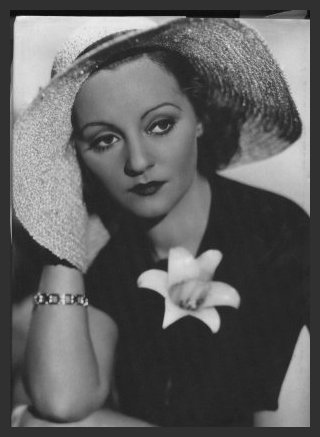
i mean, it pleases my aesthetics. i know beauty is subjective and what floats one boat grounds another, but i think in both form and content most would agree it is a reasonably "good" picture. by form i mean the photograph itself, which is a technically sound portrait, well-lit, good composition and all that. by content i mean the woman herself, and this is where things get complicated for me.
she's beautiful, right? i mean, i love her whole look. i love the whole look - that 70s-like puffy hair (if i had straight hair that's prob how i rock it), the eye makeup, etc. but i also like the way she looks. she's very pretty, and thanks to the technical soundness of the photograph i feel as though i could reach out and touch her, the texture is so rich it doesn't take much imagination to think of how her hair, skin etc. would feel. i get real pleasure in looking at, at consuming this photograph of this young, beautiful, white woman.
now, as a black woman (who is speaking only for herself), here's where desire and looking/consumption get complicated.
i found this image on my beloved Tumblr. her name, Brigette Bardot, was captioned, but the user before me had crossed it out and written instead, "Racist Cunt." turns out Brigette is a famous French actress who apparently, in her own words, "doesn't hold Muslims in high esteem." Nor does she like "girls from the East, Nigerians, travelers, transsexuals, drag queens, bearers of AIDS," and so on and so forth. so much so that she has gone on trial in France on charges of "inciting racial hatred" not once, not twice, but FIVE times (side note: if there's a law against inciting racial hatred, how in the world world has that insanely racist burqa ban got this far? but that's a rhetorical question).
so, this beautiful woman, whom i was taking so much pleasure in looking at, would probably take significantly less pleasure in looking at me. and that's the fucking rub. that's my complicated relationship with consuming whiteness - more specifically, with consuming whiteness with pleasure.
not just because it's a one-way street, because sometimes it's not. thanks to the black power movement and the black arts movement and such the beauty of blackness is more openly recognized by the mainstream, though it my be under questionable circumstances. or rather, it's a conditional two-way street. heavily conditional. but that's another blog post for another time.
the complication for me arises with the realization that this beauty, and the enjoyment of this beauty, is quite treacherous. it's quite the double-edged sword. because, you know, in america? whiteness is it, okay? it is the standard of being and of beauty, especially when you're talking about so-called classic beauty, which i'll get to in a minute. (there's a long history behind this that include things like slavery colonialism and the rise of capitalism and modernity and stuff, and i couldn't possibly go into it now but there are writers who do.) and this beauty, this white beauty is treacherous for two reasons: one, because it is built on negation and projection. negation of things like licentious, dangerous sexuality and the physical evidence of hard work, for example, and the projection of these things onto non-white female bodies (since i am talking about women here, but the same thing can be said for non-white male bodies as well). as Sojourner Truth may or may not have pointed out, black women historically have never had the luxury of being placed on a pedestal. so i look at images of white women, especially the "classic" ones, i know while my body is key to the existence and continuation of this beauty, i could never be beautiful in that way. a perfect example being when Lena Horne, a classic beauty if there ever was one, first met Tallulah Bankhead, a classic classique, Bankhead compared Horne to the slaves that her, Bankhead's, grandfather had once owned, and then praised her for not looking like a "typical negro." to her face. Bankhead, unable to reconcile her idea of blackness with Horne's appearance, first calls her out of her name (by comparing her to slaves and completely ignoring the issue of agency being the vital difference here) then dismisses her outright, by diminishing her heritage and her identity, erasing them actually, by approving the so-called whiteness of her features.
if mother-effing Lena Horne (rest in power), can't be a classic beauty, or "just" beautiful, then how could i be? because so much of pleasure is wrapped up in desire, so how could i find pleasure in what not only am i excluded from, but that depends upon my exclusion for its survival?
the second reason as to why my pleasure with these images frankly scares me is because of what they don't say, which is: how they came to be, that is, WHY they are beautiful. and what they cover up. it has to do with how whiteness, through a centuries long, genocide-wracked project of global colonial conquest, has come to symbolize things like goodness and purity and leisure, and blackness, or color of any sort, has come to symbolize deviance and perversion and labor. and how, if you look at whiteness and take the beauty and goodness and purity that we've been taught to see, if you take it at face value or take it to heart it can be hard to believe that it could ever do anything awful, that it is itself depended on a kind of violence - a violence that for me reoccurs with each viewing. and i think of how we look at images of "classic beauty" nowadays, about how there are these cults of personality around neo-vintage figures like Dita Von Teese and a resurgence of interest in figures like Bettie Page, and you know folks like Marilyn and Audrey always had and will have a fan club. and how i am nowhere to be found among those images (how many black pin ups have you come across lately?). i think about the "classic beauty" of Carolyn Bryant and how pretty her husband, Roy Bryant, must have thought she looked as they celebrated Roy and his half-brother J.W. Milam's acquittal for the murder of Emmett Till, a crime which they later confessed to. how that courtroom was filled with classic beauties. and for me especially it becomes so dangerous to be seduced by that kind of beauty, that kind of whiteness because 1. my consumption of this impinges on an almost complete annihilation of self, at least as far as representation goes, 2. i risk the physic bait-and-switch, where, as in the case of Bridgette Bardot, where i allow myself to take pleasure and then am violently reminded that i am "not" beautiful, and 3. as in the case of emmett till and the hundreds of other black men who were lynched for the possibility that they might have taken pleasure, physical or otherwise, in the/from the consumption of whiteness/white beauty, that metaphorical annihilation becomes literal.
no matter how i look at it, as a black woman, the seeming fact that the consumption of whiteness implies the negation of the possibility of a simultaneously "beautiful" black woman, unburdened with tropes of uncontrollable sexuality etc. etc. at that, makes the pleasure that i take in consuming whiteness really really really complicated. is it at all possible for me to consume whiteness, desire whiteness, without negating myself?
which brings me to beyonce.
this was a realllllllly intense video for me to watch. so much so that i had to stop it and come back to it later. and it's not till now, writing all this out, that im figuring out why.
well number one, because i have a complicated relationship with beyonce anyway (again, another blog for another time. maybe). number two, i really really want all of the outfits she's wearing. all of them. yes, even THAT one. but most importantly, i'm becoming more and more interested in burlesque, which beyonce is referencing pretty heavily in the vid, to the point that i'm seriously considering becoming a burlesque performer. i guess that's also where this post is coming from, because i've been grappling with the issues of being a black performer in an idiom that has been portrayed as being predominately white - this is a great post that addresses those issues, by a burlesque performer of color. what im most curious about is, is it possible for a woman of color to appropriate these symbols of beauty that have historically been signifiers for white womanhood?
well, according to beyonce, no. it's fascinating that beyonce has chosen this as her subject matter (or had it chosen for her, who knows)- i feel like she's becoming a bit edgier these days, flirting onscreen with gaga and whatnot, and it's interesting to see how her portrayals of her own sexuality have evolved over the years/are evolving. i love the fierceness with which she puffs on that cig. but it doesn't seem like she can find some sort of medium between appropriating these images and keeping hold of her blackness - instead, she becomes the images. her makeup makes her much, much lighter - which is the first thing i noticed right off, her make up in the opening shots. you can actually see the white powder they used, it's like when people use foundation a shade or two lighter than their actual complexion, it just makes it more clear that that is NOT their real skin color. then there's the blonde hair, the red lipstick, even her movements replicate those of early burlesque stars, who were mostly white. of course we know she's black, and there's always the question of what is"black" anyway and can/must black always be exhibited in certain prescribed ways (i certainly don't think it must) - but there's no denying that at least here, she is unable to appropriate the "classic beauty" without becoming brighter, blonder, and "whiter" than she has presented herself in previous videos, even in videos so recent as Telephone. there is no appropriation, actually, it's all replication, and in order to replicate white beauty, black beyonce has to go.
now i certainly don't think beyonce is the end all be all of this question. there are some fabulous burlesque performers of color who managing to navigate questions of identity, history, performance and beauty without crossing over to the white side. (get it? because normally it's the DARK side, right? which goes back to what i was saying earlier about dark equalling bad and oh blah blah blah) but it is something to navigate. and beyonce, as a pop performer, has a much wider audience than any burlesque performer, so what does it mean when the world is watching this black woman grapple with whiteness, and seemingly cede to whiteness? especially as that whiteness is built on the very body she is erasing?